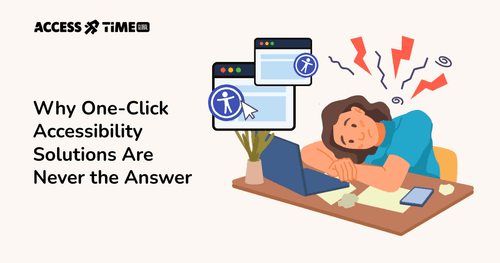
Why One-Click Accessibility Solutions Are Never the Answer
Prasaja Mukti - Accessibility UX Writer
●●
In January 2025, the Federal Trade Commission delivered a powerful message to the accessibility industry by fining accessiBe $1 million for false advertising and misleading marketing practices. This landmark decision highlights a critical truth that accessibility professionals have been advocating for years.
There are no magical one-click solutions to web accessibility, despite what some companies would have you believe.
Understanding the Accessibility Overlay Promise
Accessibility overlays are third-party tools that claim to enhance website usability for people with disabilities through JavaScript modifications to a site's front-end code. These tools promise to adjust presentation elements like font sizes, colors, and navigation features with minimal effort from website owners. "Install a simple widget, and your website becomes instantly compliant with accessibility standards while protecting you from potential lawsuits" yes, even the pitch is seductive.
For business owners juggling countless priorities and facing the complexity of accessibility compliance, these solutions can seem like a lifeline. The promise of achieving accessibility without extensive development work or significant investment appeals to organizations that genuinely want to do right by their users but feel overwhelmed by where to start.
The Reality Behind the Promise
Recent empirical research reveals a troubling disconnect between marketing claims and user experiences. A comprehensive study published in 2024 examined the experiences of blind and low-vision users with accessibility overlays, and the findings paint a concerning picture. Rather than improving accessibility, these tools often create additional barriers and frustrations for the very people they claim to help.
The research found that 42% of participants had abandoned websites they regularly visited because of accessibility overlays. Screen reader users, who represent a significant portion of blind and low-vision web users, reported that:
-
overlays frequently conflicted with their assistive technologies
-
making websites harder to navigate rather than easier
-
it creates confusion
Why Overlays Fall Short
The fundamental issue with accessibility overlays lies in their approach to solving accessibility challenges. Accessibility requires understanding the diverse needs of users with disabilities and implementing solutions that work harmoniously with assistive technologies. Overlays attempt to retrofit accessibility onto existing websites without addressing underlying structural issues.
Regulators have also taken notice. Under the European Accessibility Act (EAA), overlays are not considered a valid method of compliance because they do not address the root causes of inaccessibility at the code and design level. The EAA guidance makes clear that accessibility cannot be achieved by layering fixes on top of existing barriers, it must be built into the product itself.
Imagine this.
If your building has stairs at the entrance, you can’t make it accessible by just putting up a sign that says “wheelchair accessible.” You need to actually build a ramp or find another way to get in. It’s the same with accessibility overlays. They might make things look better, but they don’t actually fix the problems that make a place inaccessible.
The Business Case for Real Accessibility
Understanding why overlays are problematic doesn't mean dismissing the legitimate challenges businesses face in achieving accessibility.
Compliance requirements, potential legal risks, and technical complexity create real pressures for organizations trying to serve all users effectively. The EAA’s position reinforces this reality: quick-fix overlays may look attractive, but they cannot deliver the legal or practical protection that businesses need.
The recent FTC action against accessiBe further demonstrates that relying on inadequate solutions can create more problems than they solve. Organizations that invested in overlay technology found themselves not only still facing accessibility challenges but also dealing with the fallout from tools that actually made their websites less usable for disabled users.
The research participants recognized that overlay companies weren't primarily serving disabled users but rather targeting businesses fearful of accessibility lawsuits.
Building Genuine Accessibility

We're kindly reminding you again that accessibility requires approach that prioritizes user needs from the ground up rather than attempting to patch problems after the fact.
What's this means?
-
Starting with inclusive design. Consider accessibility during the planning and design phases, not as an afterthought. When accessibility is built into the foundation of your digital presence, it becomes more effective and less costly to maintain.
-
Understanding your users Engage with people with disabilities to understand their actual needs and experiences. The research emphasized that participants wanted to be involved in the development and testing of accessibility tools rather than having solutions imposed upon them.
-
Taking a comprehensive approach Address accessibility systematically across all aspects of your website or application, from navigation structure to content presentation to form design.
-
Ongoing commitment Accessibility isn't a one-time fix but an ongoing responsibility that requires regular attention and updates as your content and technology evolve.
Doing Accessibility with Confidence
The message here isn't that achieving accessibility is impossible or that businesses should feel discouraged by the complexity involved. Rather, it's that sustainable, effective accessibility requires thoughtful investment in proper solutions rather than shortcuts that ultimately fail both businesses and users.
The lawsuit against one of accessibility overlays sends a clear signal that the era of unsubstantiated accessibility claims is ending. This creates an opportunity for organizations to invest in genuine accessibility solutions that actually work for disabled users while providing real protection against compliance risks.
Many businesses have successfully implemented comprehensive accessibility programs that serve users effectively while meeting legal requirements.
The key is working with knowledgeable professionals who understand both the technical requirements and the human needs that drive accessibility standards.
Taking Action
If you're currently using an accessibility overlay or considering one, now is the time to reassess your approach.
Consider starting with a comprehensive accessibility audit to understand where your website currently stands and what improvements would have the most impact for your users. Professional accessibility consultants can help you develop a roadmap that addresses real user needs while building sustainable accessibility practices into your organization.
At AccessTime, our accessibility consultants work with businesses to develop practical, effective accessibility strategies that serve real user needs.
For organizations ready to take their first steps toward genuine accessibility, our Access Lens (beta) tool offers free accessibility audits while in beta, providing detailed insights into your current accessibility status and actionable recommendations for improvement.
It may require more effort than a one-click solution, but accessibility leads to digital experiences that truly serve all users while providing meaningful protection for your organization.
Contact Us
Ready to explore how accessibility can transform your products? Visit our contact page to learn more about AccessTime consultancy services, or try Access Lens to get started with a fresh perspective on what's possible.
Share: