[POUR SERIES] Robust: Building Future-Proof Accessibility Through Technical Excellence
Prasaja Mukti - Accessibility UX Writer
●●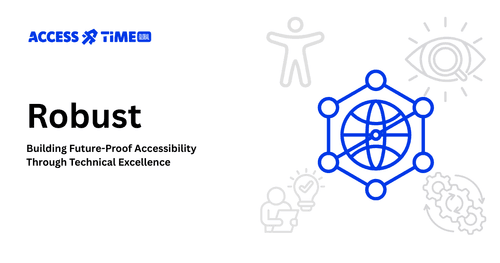
The Robust principle ensures that digital content works reliably across diverse technologies, browsers, and assistive devices, both today and as technologies evolve. This fourth pillar of WCAG's POUR framework addresses the technical foundation that makes accessibility sustainable and scalable, transforming code quality from a technical concern into a strategic business advantage.
Organizations implementing robust design principles discover that technical accessibility excellence creates resilient applications that perform better, cost less to maintain, and adapt more easily to technological change, benefits that extend far beyond serving users with disabilities.
Standards-Compliant Code: The Foundation of Reliability
Robust content begins with standards-compliant HTML, CSS, and JavaScript that assistive technologies can interpret reliably. This adherence to web standards isn't about technical perfectionism because it's about creating predictable, maintainable code that works consistently across different environments.
When streaming service Hulu refactored their codebase to meet robust accessibility standards, they experienced unexpected benefits beyond improved screen reader compatibility. Page load times decreased by 23%, browser compatibility issues dropped by 47%, and development velocity increased as cleaner code reduced debugging time. The investment in robust code created a more efficient development pipeline while expanding their accessible user base.
Semantic HTML structure forms the backbone of robust content. Using proper heading hierarchies, landmark regions, and meaningful element choices creates machine-readable content structure that benefits search engines, assistive technologies, and future parsing systems simultaneously. This semantic foundation reduces technical debt while improving discoverability and usability.
Assistive Technology Compatibility: Beyond Screen Readers
Robust design ensures compatibility with diverse assistive technologies including screen readers, screen magnifiers, voice recognition software, alternative input devices, and emerging technologies. This compatibility requires understanding how different tools interpret and interact with digital content.
ARIA (Accessible Rich Internet Applications) attributes enhance robust compatibility by providing additional semantic information to assistive technologies. However, effective ARIA implementation requires careful consideration—incorrect usage can create confusion rather than clarity. Companies like Microsoft invest heavily in ARIA testing across multiple assistive technologies to ensure robust compatibility that serves users reliably.
When financial platform Robinhood improved their ARIA implementation following robust principles, they reduced assistive technology navigation errors by 38% while creating more maintainable code that new developers could understand and extend more easily. The technical rigor required for robust accessibility improved overall code quality throughout their application.
Cross-Browser and Cross-Platform Consistency
Robust content functions predictably across different browsers, operating systems, and devices. This cross-platform reliability serves users with disabilities who may rely on specific technology combinations while ensuring consistent experiences for all users regardless of their chosen platform.
Progressive enhancement strategies exemplify robust design thinking. Building core functionality that works without JavaScript, then enhancing with additional features for capable browsers, creates more resilient applications. When news platform Medium implemented progressive enhancement following robust principles, they saw a 31% increase in content accessibility from users on older devices or slower connections—an audience segment that would have been completely excluded by JavaScript-dependent implementations.
Browser testing across different assistive technology combinations reveals compatibility issues that standard testing might miss. Organizations prioritizing robust compatibility report fewer support tickets related to browser-specific issues and reduced maintenance costs as code works reliably across environments without platform-specific workarounds.
Future-Proofing Through Technical Standards
The robust principle emphasizes building for technological change rather than current technology alone. Code written to established standards adapts more easily as browsers update, assistive technologies evolve, and new devices emerge.
When Apple releases new iOS accessibility features or screen readers add new capabilities, robustly-coded applications can leverage these improvements without requiring extensive rewrites. This adaptability reduces long-term maintenance costs while ensuring that users benefit from technological advances as they occur.
API stability and backward compatibility considerations fall under robust design. Applications that rely on stable, documented interfaces rather than implementation-specific quirks remain functional as underlying systems evolve. This technical discipline serves business continuity while supporting accessibility requirements.
Validation and Quality Assurance
Robust content meets technical validation standards that verify code correctness and accessibility compliance. Automated validation tools identify markup errors, missing attributes, and standards violations that could create compatibility issues.
However, robust implementation requires more than passing automated validators. Real-world testing with actual assistive technologies reveals nuanced compatibility issues that automated tools miss. Companies like Airbnb combine automated validation with regular assistive technology testing to ensure truly robust compatibility.
Error handling and graceful degradation contribute to robustness. When features fail or aren't supported, applications should maintain core functionality rather than breaking entirely. This resilience serves all users encountering unexpected technical issues while ensuring accessibility under diverse conditions.
Performance and Technical Efficiency
Robust code tends to be more efficient code. Clean semantic markup loads faster than excessive div-based layouts. Proper heading hierarchies enable faster navigation for keyboard and screen reader users. Standards-compliant CSS reduces browser rendering overhead.
When e-commerce platform Etsy optimized their codebase for robust accessibility, they achieved a 19% improvement in overall site performance as cleaner markup and efficient DOM structures reduced processing overhead. This performance gain improved user experience across all devices while reducing infrastructure costs through more efficient resource utilization.
Strategic Technical Investment
Robust design principles create long-term technical advantages that reduce maintenance costs, improve platform stability, and enable easier feature development. Organizations prioritizing robust accessibility report higher code quality scores, faster development cycles, and reduced technical debt accumulation.
The challenge lies in implementing robust practices systematically across development teams and ensuring consistent quality as applications scale and evolve.
Ready to build robust accessibility that stands the test of time? Our AccessTime experts specialize in implementing robust design principles that improve technical quality while ensuring reliable accessibility across all platforms and devices. Schedule a consultation to discover how robust development practices can reduce maintenance costs, improve application stability, and create competitive advantages through technical excellence.
Transform your codebase from fragile to robust, and unlock the business benefits of truly future-proof accessibility.
Contact Us
Ready to explore how accessibility can transform your products? Visit our contact page to learn more about AccessTime consultancy services, or try Access Lens to get started with a fresh perspective on what's possible.
Share: