AI-Assisted Accessibility: What It Means and What It Doesn’t
Prasaja Mukti - Accessibility UX Writer
●●
The Great Automation Misconception
Let's address the elephant in the room. When many businesses hear "AI-assisted accessibility," they immediately think "automation equals solution." It's an understandable leap. After all, we live in an era where AI can write emails, create presentations, and even drive cars.
Surely it can handle accessibility too?
This thinking has led to what I call the "set it and forget it" mentality. Companies deploy automated tools expecting them to magically make their digital products accessible to everyone. But accessibility isn't a technical problem that can be solved with pure automation, it's a human experience problem that requires human understanding.
Research from WebAIM's annual accessibility analysis consistently shows that automated accessibility tools catch only about 25-30% of actual accessibility issues. Even more telling, their 2023 study of the top one million websites found that 96.3% had detectable accessibility failures, despite many using automated scanning tools. These numbers aren't meant to discourage, they're meant to illuminate the gap between what we think AI can do and what it actually accomplishes.
What AI Actually Brings to the Table
Don't get us wrong, AI has a valuable role in accessibility and it actually help us build the tools that makes our job easier. It's just not the role most people think it plays.
AI excels at the heavy lifting:
-
processing large volumes of content
-
identifying potential issues, and
-
providing initial assessments.
Think of it as a really sophisticated screening tool.
-
It can flag images without alt text
-
highlight color contrast problems, or
-
identify headings that might be out of order
These capabilities are genuinely helpful and can save countless hours and hours of manual review.
For instance, AI can analyze a website and quickly identify that 200 images lack alternative text. That's useful information. But where the human element becomes irreplaceable? Its determining what that alt text should actually say requires understanding context, purpose, and user intent, things that current AI simply cannot grasp with the nuance required.
Consider an image of a person in a business suit shaking hands with someone. An AI might generate: "Two people shaking hands in business attire."
But a human accessibility expert would ask:
-
What's the purpose of this image?
-
Is it decorative?
-
Does it convey important information about a partnership?
-
Is it part of a testimonial?
The resulting alt text could be completely different based on these contextual considerations.
The Human-in-the-Loop Advantage
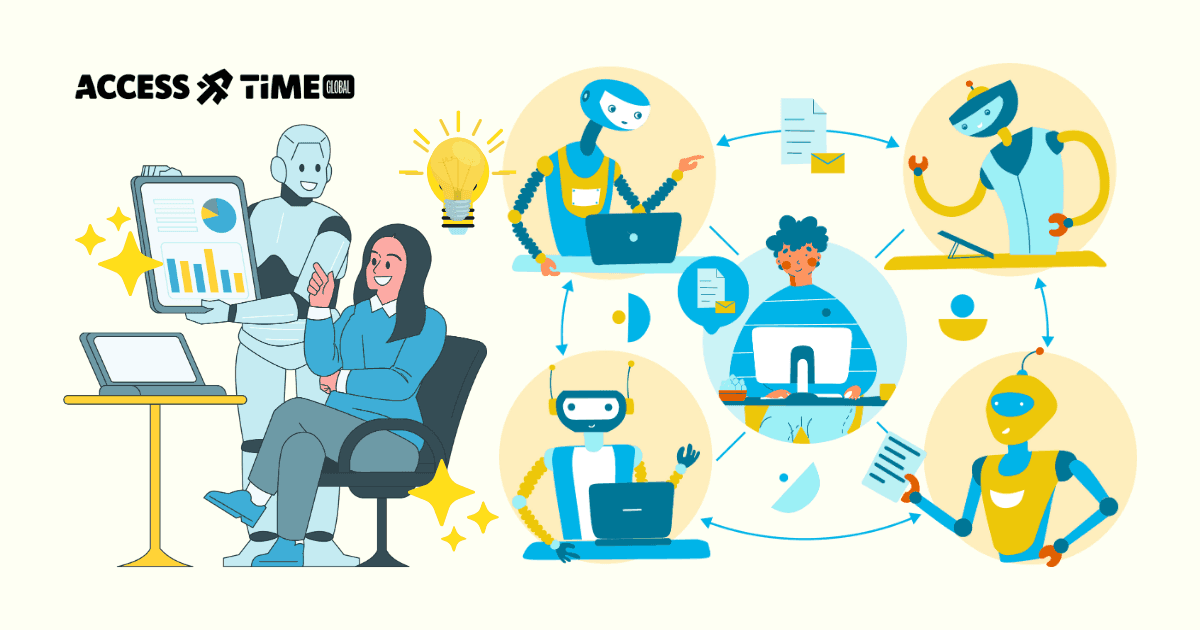
This brings us to the heart of effective accessibility: the human-in-the-loop approach. This is about humans with AI, working together to create genuinely inclusive experiences.
Research from the University of Washington's Center for Accessible Technology shows that accessibility solutions involving human oversight achieve 87% higher user satisfaction ratings among people with disabilities compared to purely automated approaches.
The reason is simple because humans understand nuance, context, and the lived experience of disability in ways that current AI cannot.
A human accessibility professional doesn't just check boxes, they think about the user journey. They consider whether a screen reader user will understand the page flow, whether someone with motor disabilities can easily navigate forms, or whether cognitive load might be overwhelming for users with attention difficulties. These insights come from training, experience, and often personal understanding of disability.
The Business Case for Getting It Right
From a business perspective, the human-in-the-loop approach is more efficient in the long run. Companies that rely solely on automated tools often find themselves in a cycle of technical debt. They fix the issues the AI identifies, only to discover that their product still isn't usable for people with disabilities. This leads to costly retrofitting, potential legal issues, and missed market opportunities.
The CDC estimates that 61 million adults in the US live with a disability. That's a significant market segment, one that controls over $490 billion in annual disposable income, according to the Return on Disability Institute. Companies that get accessibility right from the start, with proper human oversight, tap into this market more effectively than those trying to automate their way to compliance.
Build Your Balanced Approach
So what does good AI-assisted accessibility look like in practice?
It starts with understanding that AI is a powerful assistant, not a replacement for human expertise.
Use AI to scale your efforts:
-
let it scan for obvious issues
-
process large content volumes
-
and provide initial assessments
But always have accessibility professionals review the results, make final decisions, and ensure that solutions actually work for real users.
Think of it like having a really good research assistant. They can gather information, flag potential issues, and prepare initial reports. But you wouldn't let them make final decisions about your accessibility strategy without review, would you?
Our goal is building better collaboration between human insight and machine efficiency. Because at the end of the day, accessibility is about people, and people understand people best. That's what AI-assisted accessibility really means, technology in service of human understanding, not the other way around.
Contact Us
Ready to explore how accessibility can transform your products? Visit our contact page to learn more about AccessTime consultancy services, or try Access Lens to get started with a fresh perspective on what's possible.
Share: