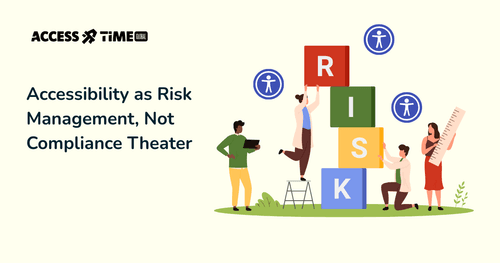
Accessibility as Risk Management, Not Compliance Theater
Prasaja Mukti - Accessibility UX Writer
●●
Most organizations do not ignore accessibility because they are careless. They ignore it because, for a long time, nothing visibly broke. The product shipped. The roadmap moved forward. Users signed up. Revenue came in.
Accessibility quietly stayed in the background, framed as something to “handle later” when audits arrive, regulations tighten, or someone complains loudly enough.
This is how accessibility becomes compliance theater. A scramble. A checklist. A last-minute remediation sprint triggered by fear rather than intention.
In AccessTime, we operate as an accessibility-first software houses operate from a very different mental model. We do not treat accessibility as a response to risk, we rather treat it as risk management itself.
Because accessibility debt behaves exactly like security debt, until it suddenly doesn’t.
“We’ll fix it later” is Never
In many teams, accessibility is postponed for rational-sounding reasons. The product is still evolving. The design system is not stable yet. The market is moving fast. We will clean it up after MVP.
The problem is that accessibility does not age like visual polish or copy refinement. It hardens into the architecture.
- Semantics get baked into component libraries.
- Interaction patterns get normalized.
- Copy decisions get replicated across hundreds of screens.
Once these patterns spread, fixing them is no longer a matter of a few tickets. It becomes systemic rework across design, engineering, QA, and content.
Accessibility-first teams understand this early. We design navigation, hierarchy, focus order, error handling, and copy clarity as part of the foundation, not as an overlay. This is not idealism. It is probability reduction.
The fewer inaccessible patterns we introduce early, the fewer chances we have to trigger costly remediation later.
Risk rarely announces itself politely
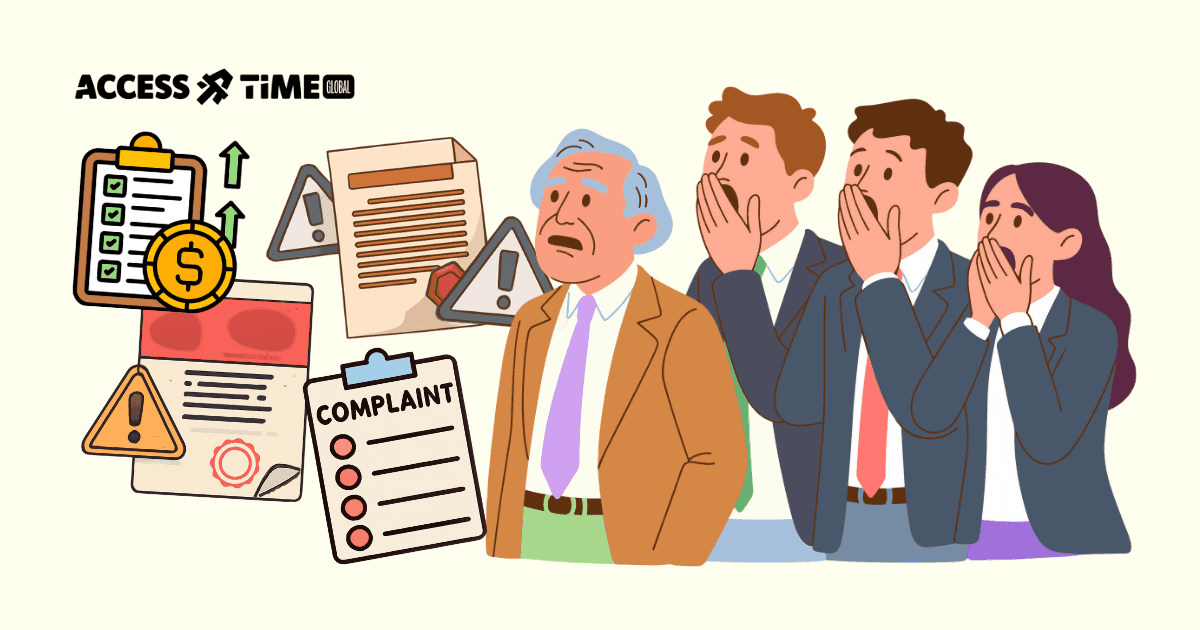
"Hello!" is never said from risks. Legal risk does not arrive as a calendar invite. Brand risk does not come with a Jira ticket. Operational risk does not ask for permission.
It shows up as a lawsuit notice. A government audit. A procurement blocker. A public complaint that gains traction. Or an internal realization that a core flow cannot be fixed without breaking half the product.
By the time accessibility becomes visible at the executive level, it is already expensive.
Accessibility-first software houses assume that visibility is lagging, not leading. We assume that what looks “fine” today may already be non-compliant in a different jurisdiction, inaccessible to a different user group, or fragile under future regulation.
So they design defensively. Just like security teams threat-model before breaches happen, accessibility-first teams model failure states before harm occurs.
What happens when someone navigates only by keyboard? What happens when error feedback is missed? What happens when content is read out of order by assistive technology? What happens when cognitive load spikes under stress?
This is risk scenarios.
Compliance theater versus preventative architecture
Compliance theater optimizes for appearances. Preventative architecture optimizes for resilience.
In compliance theater, accessibility work clusters around audits. Teams retrofit labels. Add aria attributes. Patch contrast issues. Produce reports. Pass checks. Then move on, until the next cycle.
In preventative architecture, accessibility is embedded in how decisions are made. Components are designed to be accessible by default. Content models enforce clarity and structure. Design reviews include accessibility questions early, not as a final gate. Engineers treat semantics and interaction patterns as first-class concerns.
The result is even better accessibility outcomes AND lower variance in delivery.
- Fewer regressions
- Fewer emergency fixes
- Fewer debates late in the process about what “should” have been done
- Fewer surprises during audits and procurement reviews.
Accessibility-first software houses are quieter under pressure because they have already reduced uncertainty.
Why regulated industries feel this first
Public sector, finance, healthcare, education, and enterprise platforms feel accessibility risk earlier than others, not because they are special, but because scrutiny arrives faster.
When regulation is explicit, accessibility debt becomes visible sooner. When procurement includes accessibility requirements, shortcuts surface immediately. When public trust matters, brand damage compounds quickly.
This is why accessibility-first partners are often chosen not for their checklists, but for their judgment.
Clients in regulated environments are not looking for teams that know how to pass audits. They are looking for teams that know how to avoid audit-driven panic altogether.
They want fewer unknowns. Fewer hidden liabilities. Fewer “we didn’t realize this would be a problem” moments.
Accessibility-first software houses—we—sell
calm
.
Choosing the boring, safer path
Accessibility-first software houses are rarely the flashiest. They tend to ask uncomfortable questions early. They slow down decisions just enough to prevent bigger slowdowns later.
They choose boring clarity over exciting shortcuts. They choose resilience over theatrics. They choose prevention over reaction.
And in a world where digital products are increasingly regulated, scrutinized, and interconnected, that choice compounds.
Accessibility is about being prepared. Not compliance theater. Risk management.
Contact Us
Ready to explore how accessibility can transform your products? Visit our contact page to learn more about AccessTime consultancy services, or try Access Lens to get started with a fresh perspective on what's possible.
Share: